Redefining Normal
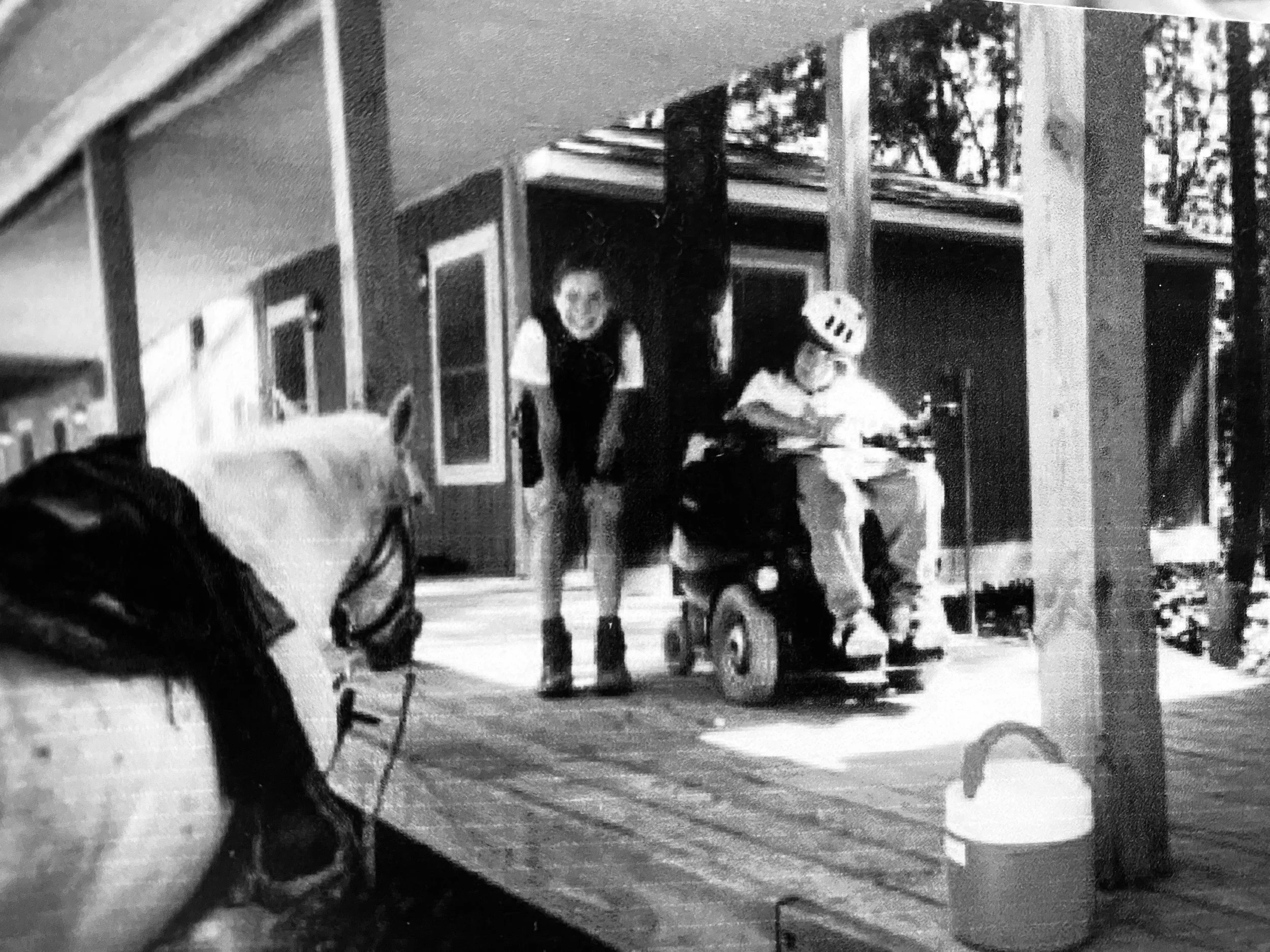
Elizabeth and Emily, July 2001
“The Lord does not look at the things people look at.
People look at the outward appearance, but the Lord looks at the heart.”
1 Samuel 16:7
“We’ve already filled all our spots for camp counselors,” said the woman on the other line.
“Perhaps you have other jobs that need to be filled?” I rushed to say. “I work well with horses. I could help in the barn. Or the kitchen—I’m comfortable prepping food.”
It was spring of 2001, and I’d applied for a position at a kids’ camp. Several college teammates had already been hired, including my boyfriend (now husband), Isaac. I couldn’t imagine a better summer than playing outside with kids all week and exploring with him on the weekends. I was made for this job. Wasn’t I?
“No, those positions are filled too,” she replied. She paused. “We do have one opening left. But it’s quite challenging.”
“I’m sure I’m up for the challenge,” I assured her eagerly, without even knowing what the position involved.
“The job is for a one-on-one counselor for campers with special needs,” she explained. I would arrive early for additional training and be responsible for far more than leading games and outdoor activities.
I hesitated. Why couldn’t I just work with the normal kids?
But I wanted the summer camp experience. So I said yes.
That summer stretched my capacity in ways I didn’t know were possible. Emotional meltdowns. Food aversions. Physical limitations. Long days that didn’t include zip lines, volleyball tournaments, or midnight hide-and-seek. After one particularly difficult week, I complained to Isaac.
“This is so hard,” I groaned. “I just want to participate in the fun activities. I feel sidelined.”
“At least you only have one child to focus on,” Isaac replied logically. “Maybe next week will be better.”
I knew he was trying to encourage me, but I felt alone in a version of camp that looked very different from everyone else’s.
Then Emily arrived.
Her parents dropped her off with her electric wheelchair and enough supplies to fill a small house. She had cerebral palsy and required total care—bathing, dressing, eating, transferring in and out of bed. So much care, in fact, that she required two caregivers instead of the usual one. Liz and I worked as a team to meet her needs. It was physically demanding and constant.
And yet, Emily radiated joy.
She thanked us daily. She cheered louder than anyone else. She insisted on participating in every activity possible.
One afternoon she looked at me and said gently, “When I’m home, I have therapy and food rules and a life that looks different from everyone else’s. Even though I have different needs, I’m just a girl who wants to have fun like every other twelve-year-old. Let me be a normal kid this week.”
Emily stayed for two weeks.
Two weeks of early morning lifts and late-night transfers. Two weeks of navigating gravel paths with an electric wheelchair. Two weeks of pure, contagious joy.
We celebrated small victories most campers never had to think about—a smooth transfer, a full meal finished, a bath before breakfast. What once prompted dread slowly became something I treasured. What once felt inconvenient began to feel…sacred.
And somewhere in those two weeks, my perspective quietly shifted.
I had started the summer wanting the “real” camp counselor experience—the blob, the zip line, capture the flag under the stars. I thought I had been sidelined. Assigned to something less than.
But Emily never saw herself as less than.
“Let me be a normal kid this week,” she had said.
At the time, I thought she was asking for permission to participate.
Now I realize she was offering me an invitation—an invitation to redefine normal.
Normal wasn’t running across the field unassisted.
It wasn’t ease.
Normal was wanting to belong. Wanting to laugh. Wanting to try. Wanting to be seen.
During those two weeks, Emily and I became dear friends. We laughed. We cried. We celebrated. And I discovered something better than the perfect job I had imagined. I learned that joy doesn’t depend on ability. That dignity has nothing to do with independence. That the outskirts of camp—and life—are often where the richest relationships are formed.
When the woman on the phone told me all the other positions were filled, I felt sidelined.
But I wasn’t sidelined.
I was being shaped.
Twenty-five years later, I still see the ripple effects of that “challenging” job. It softened my assumptions. It sharpened my compassion. It quietly steered my heart toward adults and kids on the outskirts—the overlooked and wonderfully different. The ones who require a little more patience, a little more creativity, a little more love.
My life today doesn’t look exactly like I imagined it would. My capacity continues to stretch. At times I still feel sidelined. But I’ve learned that unexpected circumstances often have a way of redefining our norms—and rewiring our hearts.
Once, I thought I had missed out on the real camp experience.
Now I know I was given the better one.